
Announcements
🌍 Introduction
Quitting smoking is one of the biggest personal challenges and, at the same time, one of the best decisions that can be made to improve health and quality of life. Although the process may seem difficult, there are practical strategies that increase the chances of success. In this article you will discover 10 effective steps to quit tobacco and how a support app can become your digital ally to stay motivated.
📋 10 Steps to Quit Smoking
1. Recognize the Problem
Accepting that smoking is an addiction and not just a social habit is the first big step. Many people minimize the impact of smoking on their health, believing that “a couple of cigarettes a day” do no harm.
Announcements
However, even small amounts of nicotine affect the respiratory and cardiovascular systems and increase the risk of serious diseases.
Recognizing the magnitude of the problem allows you to make more conscious and firm decisions. A good practice is to write in a notebook all the times you smoke and reflect on the true reasons behind each cigarette.
2. Set a Date to Leave
Announcements
Defining a specific date creates a real commitment and helps prepare the body and mind. It is not about choosing a day at random: it is advisable to choose a week with less stress or avoid festive periods where the temptation is greater.
Placing that date on the calendar and notifying family or friends reinforces the seriousness of the purpose. Additionally, the days before can be used to gradually reduce consumption, facilitating the transition to complete abandonment.
Having a well-planned “día ceroc” significantly increases the chances of success.
3. Seek Support
The process of quitting smoking can be lonely if it is not shared. Having social support, whether from family, friends or specialized groups, is a decisive factor.
When moments of anxiety or weakness come, having someone who listens and motivates makes a difference. Today there are also virtual communities, forums and applications that allow you to interact with other ex-smokers.
Sharing goals, achievements and difficulties generates empathy and reinforces determination. External support, combined with self-willpower, multiplies the chances of staying firm on the path.
4. Identify Triggers
Many times cigarettes are associated with specific routines: after coffee, while driving, at social gatherings or in times of stress.
Identifying these triggers is key to replacing them with new, healthier actions. For example, instead of smoking after eating, you can choose to brush your teeth or take a short walk. Breaking the association between habit and situation requires practice and attention, but over time the brain reprograms itself.
Recognizing these moments of risk prevents relapses and strengthens self-control, facilitating the construction of new smoke-free routines.
5. Replace the Habit
The void left by cigarettes must be filled with positive alternatives. Many people find relief in chewing sugarless gum, drinking water in small sips, or having an anti-stress object on their hands.
These actions not only keep the body busy, but also help divert the mind from the urge to smoke. Incorporating new activities such as sports, reading or meditation allows energy to be redirected towards constructive habits.
Over time, these substitutions become permanent allies to maintain a balanced life free of addictions.
6. Control Anxiety
One of the biggest obstacles is the anxiety that arises after quitting nicotine.
The body protests, the brain demands dopamine and the smoker feels a void that is difficult to tolerate. Techniques such as deep breathing, guided meditation or even creative activities such as drawing or writing come into play here.
Physical exercise also acts as a powerful anxiety regulator. Recognizing that these symptoms are temporary and will decrease over time helps you stay calm. Learning to manage anxiety without smoking is key to consolidating change.
7. Use Resources and Tools
Today there are multiple resources to help in the process. From nicotine replacement therapies, such as patches and gum, to mobile apps that make progress, everything can become valuable support.
Some health professionals recommend guided behavioral programs or even specific drugs in cases of very strong dependence.
The important thing is not to face the situation without tools. Having reminders, statistics of cigarettes avoided and money saved generates daily positive reinforcement that drives you to move forward without relapse.
8. Maintain Consistency
Initial enthusiasm may wane as the days go by, especially when anxiety builds up or temptation arises.
Consistency comes into play here. Remembering the reasons that led to making the decision, reviewing the benefits obtained so far and visualizing the final goal help maintain motivation.
It is also helpful to keep a written record of progress, celebrating each achievement achieved. Consistency is not about being perfect, but about persevering even after small falls. The important thing is not to abandon the path.
9. Reward yourself for Achievements
Recognizing progress with personal rewards reinforces commitment. These rewards don't have to be expensive: a special walk, a trip to the movies, a favorite meal, or even a symbolic gift can make all the difference.
The brain associates the action of quitting smoking with pleasant sensations, which reinforces motivation. Many people save the money they previously spent on cigarettes and allocate it to something meaningful, turning each achievement into a celebration.
These small victories act as emotional fuel to continue moving towards a smoke-free life.
10. Avoid Relapses
Relapses are part of the process and should not be interpreted as a total failure. It is normal for an ex-smoker to light up a cigarette at some point, but the important thing is to analyze why it happened and how to avoid it in the future.
Anticipating risky situations, such as parties, work stress, or social gatherings, helps you stay strong. Developing an action plan for these critical moments strengthens resilience.
Every attempt counts and every relapse can become a lesson in consolidating a stronger, more lasting determination.
🤳See Also:
- The Definitive Guide to the Best Refrigerators
- Top 10 Apps to Watch Novels on Your Phone
- Listen to Your Favorite Music Offline, Anytime, Anywhere
- 5 Homemade Recipes that Suction Hunger
- App to Play Guitar
📱 Recommended Support App:
Smoke Free
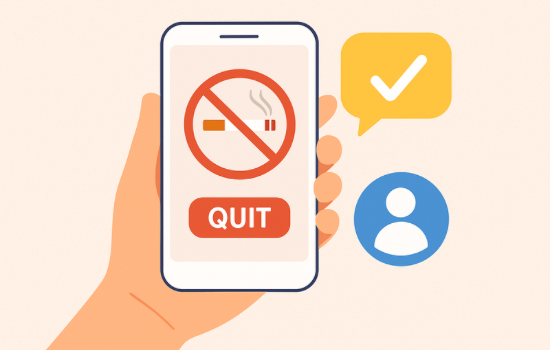
Smoke Free is one of the most popular and effective apps for quitting smoking. Available on Android and iOS, it offers:
- 📊 Health statistics: show how your body improves day by day.
- 💰 Economic savings: calculate how much money you have stopped spending.
- 🎯 Challenges and achievements: small daily goals to stay motivated.
- 🧘 Practical strategies: tips to overcome cravings.
👉 You can download it here:
🏆 Conclusion
Quitting smoking requires commitment, but it is entirely possible if you follow clear steps and have support tools. With practical strategies, social support and an app like Smoke Free, the path to a tobacco-free life becomes more achievable.