Announcements
Overview of the plant-based market in Latin America
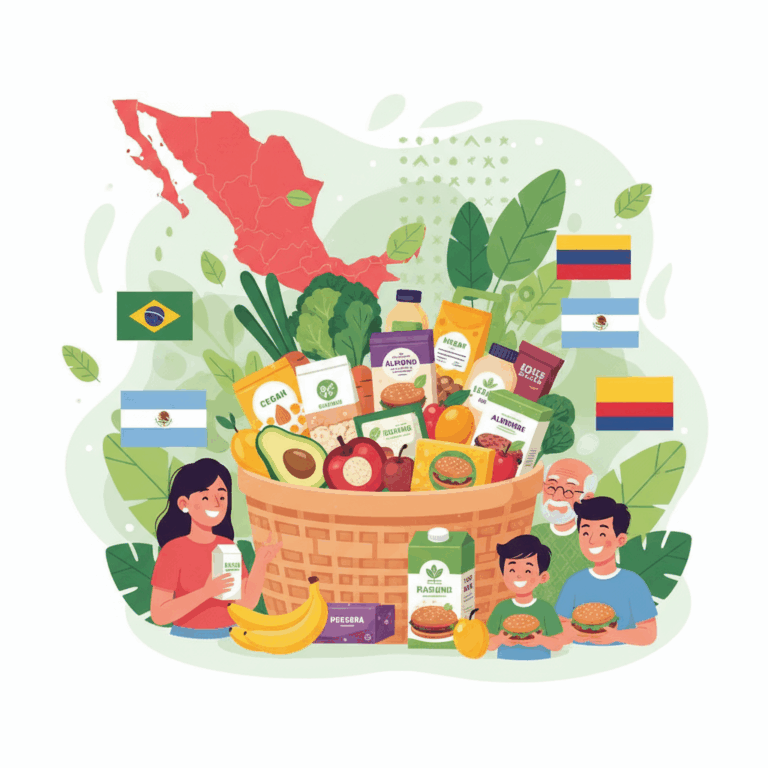
Latin America is going through a significant transformation in its food consumption, driven by the growing demand for products plant-based. This change reflects social awareness about sustainability, health and animal welfare.
The Latin American vegan food market is projected to grow at an annual rate of 6.5% between 2025 and 2034, reaching an estimated value of 2.4 billion dollars in 2034, according to specialized reports.
Announcements
This evolution is supported by the increasing availability of plant-based alternatives that facilitate public access to healthier and more sustainable options in their daily diet.
Market growth and projections
The plant-based market in Latin America shows sustained growth, driven by conscious consumers looking for responsible options. The compound annual rate of 6.5% shows a favorable scenario for expansion.
Announcements
In 2023, vegetable meat alternatives invoiced 706.9 million dollars, with an expected growth of the 19.5% annual until 2030, exceeding the global average and confirming the potential of the region.
This boom reflects not only an ethical and environmental interest, but also aspects related to health, which motivate a large part of the population to modify their eating habits.
Main leading countries and cities
Brazil and Mexico stand out as leaders in the plant-based market due to their high percentage of vegetarian and vegan population. In Brazil, a 14% the population identifies as vegetarian, with a growth of 75% since 2012.
In Mexico, it is expected that by 2025 a close to 9% of the inhabitants are vegan and 19% vegetarian. Mexico City is the third city in the world with the most 100% vegan restaurants.
This reality demonstrates the consolidation of the plant-based market in key urban centers, favoring both the supply and consumption of plant-based products.
Variety and accessibility of plant-based products
The diversity of plant-based products has grown significantly, offering alternatives that imitate traditional dairy products and meats, adapting to different tastes and needs. This facilitates the transition towards more sustainable and healthy diets.
The accessibility of these products has increased thanks to their presence in supermarkets and restaurants in Latin America, democratizing plant-based consumption and meeting a growing demand in various cities.
This variety and accessibility strengthens the regional market, allowing more consumers to discover and adopt plant-based options with greater ease and confidence.
Alternatives to dairy and meat products
Plant alternatives to dairy and meat products include milk, cheese, yogurt, and meats made with ingredients such as soy, chickpeas, almonds, and peas. These options retain flavor and texture.
These alternatives meet the expectations of those seeking to reduce animal consumption or avoid allergens, being an attractive option for vegans, vegetarians and flexitarians.
Technological development has made it possible to improve the sensory experience, making plant-based products similar to conventional ones in terms of quality and flavor.
Availability in supermarkets and restaurants
Supermarkets in large Latin American cities have expanded their offering of plant-based products, facilitating access to consumers with different budgets and preferences.
Specialized restaurants and commercial food chains have also incorporated vegan and vegetarian menus, increasing the gastronomic offer to serve diverse and expanding audiences.
This growth in availability contributes to more and more people being able to incorporate plant-based products into their daily diet, promoting a more sustainable diet.
Diversification of options for consumers
Diversification in plant-based products includes a variety of flavors, formats and price ranges, adapting to the cultural preferences and eating habits of the region.
Innovations are observed that incorporate gluten-free and allergen-free labels, serving specific niches within the market and increasing the inclusion of consumers with special needs.
This multiplicity of options strengthens the plant-based market, driving adoption by new consumers and fostering economic growth in the industry.
Technological innovation in the plant-based sector
Technological innovation is fundamental for the growth of the plant-based sector in Latin America, improving the quality and acceptance of plant products. Companies invest in developing foods that replicate traditional characteristics.
These technologies allow us to create products with textures and flavors very similar to conventional ones, attracting a broader audience, including flexitarians who seek to reduce animal consumption without completely eliminating it.
Advanced technology also drives the production of healthier foods, with allergen-free options adapted to different preferences, thus strengthening the accessibility and variety of the market.
Development of products with traditional characteristics
Companies like Fazenda do Futuro have managed to replicate the texture, flavor and appearance of animal products using plant ingredients. This facilitates acceptance by consumers looking for familiarity in their food.
Products include meats, cheeses, yogurts and milks, which retain the traditional sensory experience but without animal ingredients. This innovation opens the market to vegans, vegetarians and flexitarians alike.
The technology applied allows us to reduce process improvements to offer better quality products, helping to expand plant-based consumption in Latin America and consolidate the sector globally.
Plant protein sources used
Soy, pea, chickpea and almond proteins are the main bases for these innovations, providing texture, flavor and nutritional value to plant-based products. Each source provides unique characteristics.
Soybeans are notable for their complete protein profile, while peas are gaining popularity for their neutral flavor and ease of replicating meat texture. Sources such as chickpeas and almonds provide variety and additional benefits.
These proteins allow us to offer products with high nutritional quality, attractive to consumers with different needs and preferences, contributing to the diversification and expansion of the plant-based market.
Factors driving plant-based expansion
The growth of the plant-based market responds to multiple ethical, environmental and health reasons that more and more consumers value and look for in their food choices.
Increasing awareness of animal welfare and sustainability drives the preference for plant-based products, generating a positive impact on the expansion of the sector.
Furthermore, interest in healthy diets reinforces this trend, consolidating the demand for alternatives that contribute to the prevention of diseases and a balanced lifestyle.
Ethical, environmental and health motivations
Ethical motivation focuses on reducing animal suffering, prompting many consumers to opt for plant-based products as a form of responsible consumption.
From an environmental point of view, the production of plant foods generates a lower carbon footprint and a more efficient use of resources than conventional livestock farming, supporting sustainability.
On health, studies link plant-rich diets with lower risk of chronic diseases, offering an important reason for the public to adopt these options.
Recent trends and growth potential
Current trends include the development of products with special labels, such as allergen-free or gluten-free, that address specific consumer needs.
The market shows accelerated growth, with high projections in Latin America, which exceeds the global average and highlights the region's potential to continue expanding.
This dynamism stimulates innovation and diversification of supply, allowing us to satisfy an increasingly broad and diverse demand throughout the continent.